Pilots do report objects in the sky that they cannot identify, and the US government now studies them under the name unidentified anomalous phenomena, or UAP. NASA defines UAP as observations of events in the sky that cannot be identified as aircraft or known natural phenomena. The best summary of the evidence comes from NASA's independent study team, which said in 2023 that most UAP observations can be attributed to known phenomena, and that the data needed to say anything definitive about the rest do not yet exist.
Key Takeaways
UAP means a sighting that cannot be identified as an aircraft or a known natural phenomenon. It does not mean an alien craft.
NASA's 2023 panel found that eyewitness reports alone usually lack the information needed to reach a conclusion.
Pilots are among the best sources, but there was no standardized system for civilian UAP reports when the panel wrote.
What "UAP" Means
The term replaced "UFO" in official use. NASA's report notes that Congress first defined UAP as "unidentified aerial phenomena", and that the term was later redefined as "unidentified anomalous phenomena".
NASA's study team described the typical case: many credible witnesses, often military aviators, have reported seeing objects they did not recognise over US airspace. Most of these events have since been explained, but a small handful cannot be immediately identified as known human-made or natural phenomena.
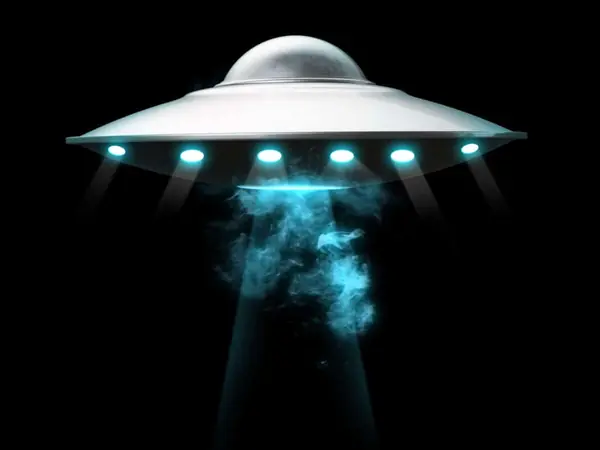
UFOs in our skies.
What NASA's Independent Study Found
NASA commissioned an independent study team in June 2022. It held a public meeting on May 31, 2023, and published its final report on September 14, 2023. The team was not asked to review earlier incidents. Its job was to work out what data exist and how NASA could collect better data.
Most sightings can be explained. The report says it is increasingly clear that the majority of UAP observations can be attributed to known phenomena or occurrences.
The data are thin. The foreword says that despite numerous accounts and visuals, the absence of consistent, detailed and curated observations means NASA does not presently have the body of data needed to make definitive scientific conclusions about UAP.
Eyewitness reports have limits. The panel says eyewitness reports, which can be interesting and compelling, are not reproducible and usually lack the information needed to draw conclusions about what a UAP is.
Sensors matter. Analysis is hampered by poor sensor calibration, a lack of multiple measurements, a lack of sensor metadata and a lack of baseline data.
In short, the honest position is that most sightings have ordinary explanations, that a few remain unexplained, and that nobody can say more without better data.
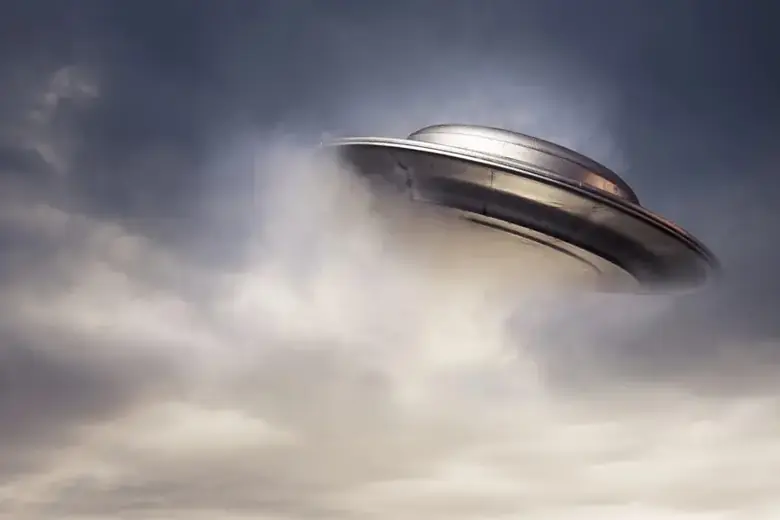
A UFO emerging from thick clouds
Why Pilots Matter
Pilots spend their working lives watching the sky, know what normal traffic looks like, and are often well placed to judge speed, altitude and distance. NASA's panel specifically flags aviation reporting. It says the threat to US airspace safety posed by UAP is self-evident, and calls the Aviation Safety Reporting System (ASRS) a particularly promising avenue. ASRS is the confidential, voluntary system for pilots, air traffic controllers and other professional aviation staff, which NASA administers for the FAA and which receives approximately 100,000 reports per year. It was not designed for UAP collection, but the panel says better using it for commercial pilot UAP reports would give a critical database.
The panel also found that there is currently no standardized system for making civilian UAP reports, which leaves data sparse and incomplete, and that the negative perception around reporting UAP is an obstacle that almost certainly leads to data attrition.
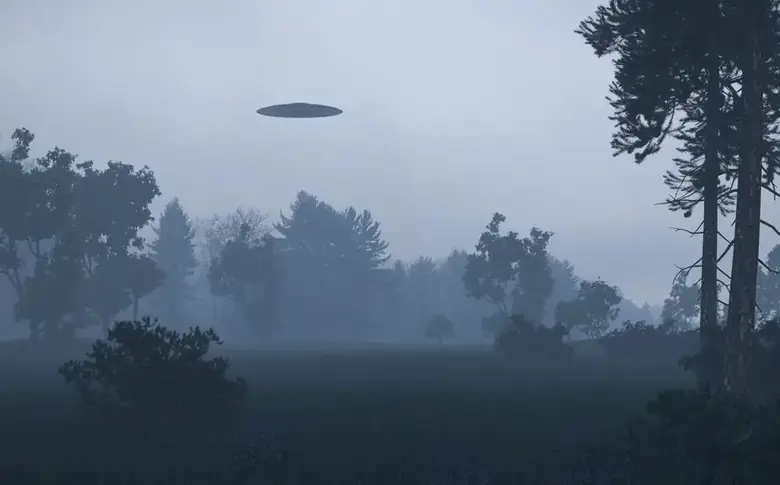
A saucer-shaped craft resting in a park, as if crash-landed
What Pilots Can Do When They See Something
Note the details immediately. Record the time, your position and altitude, the heading, how long you saw it, its apparent size, motion, lights and what the weather was.
Tell ATC if it affects safety. A close approach or a possible collision hazard is a safety matter first.
Consider an ASRS report. It is voluntary and confidential, and it is the existing channel NASA's panel points to for aviation staff.
Rule out the ordinary. Check for balloons, aircraft, satellites, drones, reflections and weather before deciding a sighting is unexplained.
A UFO spotted from a small plane above snow-capped mountains
Natural Things That Fool Pilots
NASA's report illustrates the point with images of known phenomena that can look strange in the right conditions: red sprites, a rare form of upper-atmosphere lightning; the aurora borealis seen from orbit; and weather balloons. Real balloons, aircraft and natural events account for most reports.
Unidentified anomalous phenomena. NASA defines UAP as observations of events in the sky that cannot be identified as aircraft or known natural phenomena.
Does NASA say UAP are aliens?
No. NASA's independent study team said the data needed to reach definitive conclusions about UAP do not presently exist, and that the majority of observations can be attributed to known phenomena.
Where can pilots report a UAP sighting?
NASA's panel points to the Aviation Safety Reporting System, a confidential voluntary system for pilots and other aviation staff, as a promising channel, though it was not designed for UAP. If it is a safety issue, tell ATC.
Why are eyewitness reports not enough?
NASA's panel says eyewitness reports are not reproducible and usually lack the information needed to draw conclusions about what a UAP is.
Keep PilotPassion in your Google results
Add us as a preferred source and we are more likely to appear in your Top Stories.