
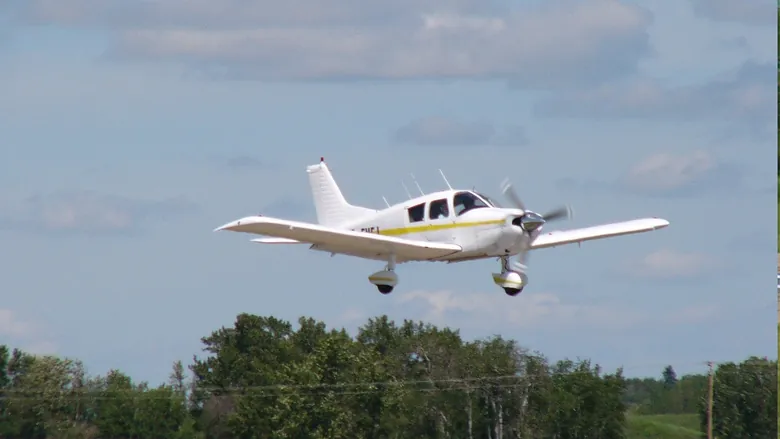
Piper makes two very different purchases. The PA-28 family of Cherokees, Warriors, Archers and Arrows is one of the biggest piston fleets in the country, with 18,238 valid registrations, and used ones ask a median of $70,000 for a Cherokee 140 and 160 up to $200,000 for an Arrow III and IV. The PA-46 family comprises six-seat piston and turboprop aircraft, including the unpressurized Matrix. Malibu listings ask a median of $459,000 and Meridian listings $1,325,000, and BCA reported an equipped M350 at $2,060,000 for the first quarter of 2026.
This guide compares the two Piper families and uses the Cessna 172 as a reference for the PA-28. It uses the FAA register for fleet size and owners, small samples of listings for asking prices, and the NTSB files for accident counts. The samples don't separate new from used listings. Asking-price samples were recorded on 2026-10-14 for the PA-28 and 2026-10-15 for the PA-46. For the full numbers behind each family, see our Piper PA-28 Cherokee cost guide and Piper PA-46 Malibu cost guide.
Data used: Piper PA-28: FAA registry through 2026-10-12; NTSB files through 2026-09-30; Piper PA-46: FAA registry through 2026-10-12; NTSB files through 2026-09-30; Cessna 172: FAA registry through 2026-10-12; NTSB files through 2026-09-30.
The everyday Piper: early Cherokees ask a median of $70,000
| Variant | Median asking price | Listings behind the median |
|---|---|---|
| Cherokee 140 and 160 | $70,000 | 13 |
| Cherokee 180 | $90,000 | 13 |
| Arrow and Arrow II | $110,500 | 12 |
| Warrior and Warrior II | $117,000 | 11 |
| Archer and Archer II | $127,500 | 10 |
| Turbo Arrow, III and IV | $179,000 | 11 |
| Arrow III and Arrow IV | $200,000 | 13 |
The gold bar is the highest median. Each group holds only a handful of listings, so treat the bars as a rough ladder and not a price guide. Groups with too few usable listings are left out.




The ladder is clear even with small groups. The Cherokee 180 asks $20,000 more than the Cherokee 140 and 160. The Warrior asks $117,000 and the Archer $127,500. The later Arrow models ask $89,500 more than the early Arrow and Arrow II, and $83,000 more than a Warrior. We couldn't find a current maker price for the Archer. The last maker price we found was $389,000 for a 2019 Archer LX, which is $261,500 above the median asking price for the older Archer group.
| Model | FAA approval date | Engine | Rated power | Maximum takeoff weight | Seats |
|---|---|---|---|---|---|
| PA-28-161 (Warrior II configuration) | 1976-10-22 | O-320-D3G or O-320-D2A | 160 hp | 2,325 lb | 4 seats |
| PA-28-181 (Archer II configuration) | 1975-07-08 | O-360-A4M or O-360-A4A | 180 hp | 2,550 lb | 4 seats |
| PA-28R-201 | 1976-11-03 | IO-360-C1C6 | 200 hp | 2,750 lb | 4 seats |
| PA-46-310P | 1983-09-27 | TSIO-520-BE | 310 hp | 4,100 lb | 6 seats |
| PA-46-350P | 1988-08-30 | TIO-540-AE2A | 350 hp | Varies by serial number | 6 seats |
Engine, seating and weight limits vary by serial number and approved configuration, so these rows are examples, not universal specifications. They show how far apart the two families are. The PA-28-161 Warrior and the PA-28-181 Archer are four-seat trainers and tourers, rated at 160 hp and 180 hp. The PA-28R-201 Arrow adds retractable gear at 200 hp. The PA-46-310P, approved on 1983-09-27, is a six-seat turbocharged single at 310 hp and 4,100 lb.
Malibu, Mirage, Matrix, Meridian and the M-series
| Model | First quarter 2025 | First quarter 2026 |
|---|---|---|
| M350 | $2,060,000 | $2,060,000 |
| M500 | $3,300,000 | $3,500,000 |
| M600 | $4,200,000 | $4,200,000 |
The PA-46 does have a current reported price, though not a maker list. Business & Commercial Aviation's price tables put an equipped M350 at $2,060,000, an M500 at $3,500,000 and an M600 at $4,200,000 for the first quarter of 2026. Only the M500 moved from the year before, up $200,000. These are BCA price estimates in first-quarter dollars. Piston prices use BCA's specified equipment standard and turbine prices use recent commercial deliveries where available, so they aren't uniform factory list prices or current quotations. The retained M600 row doesn't establish current factory availability.
| Asking-price sample | Median asking price | Listings behind the median | FAA registration label group | Status V registrations in that group |
|---|---|---|---|---|
| Malibu | $459,000 | 7 | Malibu labels | 214 |
| Malibu Mirage | $719,000 | 22 | Mirage and M350 labels | 670 |
| Malibu Matrix | $672,500 | 6 | Matrix labels | 101 |
| Meridian | $1,325,000 | 33 | Meridian and M500 labels | 404 |
The Mirage median is $260,000 above the Malibu's, and the Meridian median is $606,000 above the Mirage's. These groups differ in model, age, equipment and condition, so their median differences don't isolate the price effect of changing variants. The Malibu, Mirage, Matrix and M350 are piston singles. The Meridian, M500, M600 and M700 are turboprops. The register has 985 status V registrations in the three piston-designation groups and 664 in the factory-turboprop designation groups. Those labels don't establish the installed engine, because a piston-designated airplane can carry an engine conversion. The 600TP and 701TP label groups are the M600 and the M700.
- 214Malibu
- 670Mirage and M350
- 101Matrix
- 404Meridian and M500
- 186M600
- 74M700
Groups follow the labels on FAA registrations. One further registration carries an unresolved PA-46 label and isn't shown.
PA-28 and Cessna 172 registration comparison
| Family | Status V registrations | Individuals, share of all records | LLCs, share of all records | Corporations, share of all records |
|---|---|---|---|---|
| Piper PA-28 | 18,238 | 43.0% | 28.0% | 13.6% |
| Piper PA-46 | 1,650 | 13.3% | 60.5% | 19.6% |
| Cessna 172 | 21,145 | 35.6% | 32.3% | 18.6% |
Registration totals count FAA status V only, while the owner percentages use all matching registry records, including other statuses. The two fleets are the same order of size: the register lists 18,238 PA-28s against 21,145 Cessna 172s, a gap of 2,907. Both are old fleets. Only 5.5% of PA-28s with a usable build year date from the 2020s, and 4.8% of Cessna 172s. The PA-28 register is more individually owned than the Cessna 172 register, with 43.0% of registry records in individual names. The PA-46 is a different market, with 60.5% in LLCs and 13.3% held by individuals. For the Cessna side of the comparison, see our guides to what a Cessna 172 costs and what a Cessna 182 costs, or our overview of types of planes.
What it costs to keep one flying
Fuel is the part you feel every hour. The burn figures below come from published sources listed at the end of this page, and the last column applies an illustrative fuel price of $6.00 per US gallon, only to show the arithmetic. Change the price and the hourly cost scales with it.
| Airplane and year | Power setting | Fuel burn | Fuel cost per hour at the example price |
|---|---|---|---|
| Piper PA-28-181, 2004 | 75 percent | 10 US gal/hour | $60.00 |
| Piper Malibu Mirage, 2006 | 75 percent | 20 US gal/hour | $120.00 |
| Cessna 172S, 2009 | 75 % | 9.7 US gal/hour | $58.20 |
The published 2006 Mirage figure is 2.0 times the estimated 2004 PA-28-181 figure. Both are labelled as 75 percent power, but altitude and mixture are unspecified, so this is an illustrative fuel comparison and not a matched operating-cost comparison. Lycoming's schedule SI 1009BF lists 2,000 hours for the TIO-540-AE2A engine, subject to its conditions, and for the PA-28's Lycoming engines our PA-28 guide lists the schedule engine by engine. Insurance, hangar fees, labour rates and loan terms depend too much on the owner and the airfield for one published number to mean anything, so we print none.
Counts, not rates
The counts below are distinct selected NTSB accident events, excluding incidents, with no country filter. Explicit Jetprop conversion labels are excluded from the PA-46 total. A fatal accident here means the event involved a fatality, possibly including people outside the family aircraft.
| Airplane | Accidents counted | Of which fatal | Share fatal |
|---|---|---|---|
| Piper PA-28 | 2,118 | 450 | 21.2% |
| Piper PA-46 | 327 | 99 | 30.3% |
| Cessna 172 | 3,412 | 503 | 14.7% |
The NTSB files record 2,118 accidents involving the PA-28 family and 327 for the PA-46. Those are counts. The NTSB doesn't publish how many hours each family flew, and the FAA's activity survey reports hours by aircraft category and not by model, so we can't divide by exposure. The PA-28 has a much larger registered fleet, but these data don't establish either family's flight-hour exposure during 2000 to 2025 or explain the difference in accident counts. The PA-46 share of fatal accidents is higher, at 30.3% against 21.2%, and a share of accidents isn't a rate of risk.
A short buying guide from the data
- Cheapest way in. Early Cherokees. The Cherokee 140 and 160 group asks a median of $70,000, and the 180 asks $90,000.
- The classic trainer and tourer. The Warrior and Archer ask medians of $117,000 and $127,500, and the register holds 15,364 status V aircraft in the PA-28 designation group, which covers several fixed-gear variants. That's a registration count, not an inventory for sale.
- Retractable gear. Arrow medians vary by group: $110,500 for the Arrow and Arrow II, $179,000 for the Turbo Arrows and $200,000 for the Arrow III and IV. The register separately counts 2,441 PA-28R and 432 PA-28RT status V designations.
- Six-seat piston single. Malibu listings ask a median of $459,000 and Mirage listings $719,000. Check the engine overhaul position and, on pressurised models, the pressurisation maintenance history before you pay.
- Turboprop. Meridian listings ask a median of $1,325,000. For newer aircraft, the table above reproduces dated BCA equipped-price figures. Its retained M600 row doesn't establish current factory availability or an M600/SLS price.
- Learning to fly in one. If you're still in training, read our guide to financing flight training before you price any of these.
Not sure you want to own? Rental pricing varies school by school and we haven't surveyed Piper rates. For how rental pricing works in practice, see how the Cessna 172 is priced in our rental guide. Our small plane cost guide puts eleven families on one page.
Questions buyers ask
What are sellers asking for a Piper Cherokee?
In our sample of asking prices, a Cherokee 140 or 160 asks a median of $70,000 and a Cherokee 180 $90,000. Warriors ask $117,000 and Archers $127,500.
How much does a Piper Arrow cost?
Early Arrows ask a median of $110,500 and the Arrow III and IV $200,000, in groups of only a dozen or so listings.
What are sellers asking for a Piper Malibu?
Malibu listings ask a median of $459,000 and Malibu Mirage listings $719,000. BCA reported an equipped M350 at $2,060,000 for the first quarter of 2026.
How many Piper aircraft are registered in the US?
The FAA register lists 19,888 registrations with status V across the PA-28 and PA-46 families: 18,238 PA-28s and 1,650 PA-46s.
Who owns Piper aircraft?
Individual registrants account for 43.0% of all PA-28 registry records, compared with 35.6% for the Cessna 172. PA-46s are mostly held by companies, with LLCs holding 60.5%.
Related aircraft guides
- Piper PA-28 costs
- Piper PA-46 Malibu costs
- Cessna 172 costs
- Cessna 182 costs
- Small plane costs
- Financing flight training
- Aircraft guides
- Types of planes
Keep PilotPassion in your Google results
Add us as a preferred source and we are more likely to appear in your Top Stories.
Sources and how the numbers were made
- Federal Aviation Administration. Releasable Aircraft Database. Retrieved 2026-10-13.
- Federal Aviation Administration. Aircraft Registration Database Description. Retrieved 2026-10-13.
- National Transportation Safety Board. Aviation accident data: avall. Retrieved 2026-10-13.
- National Transportation Safety Board. Historical aviation accident data: Pre2008. Retrieved 2026-10-13.
- National Transportation Safety Board. Aviation data dictionaries. Retrieved 2026-10-13.
- National Transportation Safety Board. Aviation data download directory. Retrieved 2026-10-13.
- National Transportation Safety Board. Aviation database release notes. Retrieved 2026-10-13.
- National Transportation Safety Board. Aviation accident database query help. Retrieved 2026-10-13.
- National Transportation Safety Board. Aviation accident database. Retrieved 2026-10-13.
- Federal Aviation Administration. General Aviation and Part 135 Activity Survey. Retrieved 2026-10-13.
- Controller.com. Piper PA-28 Cherokee aircraft for sale. Retrieved 2026-10-14.
- Federal Aviation Administration. Type Certificate Data Sheet No. 2A13. Retrieved 2026-10-14.
- Federal Aviation Administration. Pilot Handbook of Aeronautical Knowledge. Glossary. Retrieved 2026-10-13.
- Lycoming Engines. Service Instruction No. 1009BF. Time Between Overhaul (TBO) Schedules. Retrieved 2026-10-13.
- Lycoming Engines. O-360 and IO-360 Series Operator Manual 60297-12. Retrieved 2026-10-14.
- Lycoming Engines. O-320 Series Operator Manual 60297-30. Retrieved 2026-10-14.
- Lycoming Engines. O-540 and IO-540 Series Operator Manual 60297-10. Retrieved 2026-10-14.
- Continental Aerospace Technologies. Service Document Master Index. Retrieved 2026-10-14.
- Plane and Pilot. 2004 New Piper Archer III N184CF. Retrieved 2026-10-14.
- Piper Aircraft. 2019 Archer LX Specification and Price Guide. Retrieved 2026-10-14.
- Piper Aircraft. 2026 Archer LX Brochure. Retrieved 2026-10-14.
- Ahunt, via Wikimedia Commons. Piper PA-28 Cherokee landing. Retrieved 2026-10-14.
- Federal Aviation Administration. Type Certificate Data Sheet A25SO, Revision 42. Retrieved 2026-10-15.
- Plane and Pilot. 2006 Piper Mirage PA46. Retrieved 2026-10-15.
- Aviation Week, Business and Commercial Aviation. Purchase Planning Handbook Q1 2025. 2025 Business Airplanes. Retrieved 2026-10-15.
- Aviation Week, Business and Commercial Aviation. Purchase Planning Handbook Q1 2026. 2026 Business Airplanes. Retrieved 2026-10-15.
- Controller.com. Piper PA-46 and M-class aircraft for sale. Retrieved 2026-10-15.
- Federal Aviation Administration. Type Certificate Data Sheet No. 3A12. Retrieved 2026-10-13.
- Federal Aviation Administration. Type Certificate Data Sheet No. 3A17. Retrieved 2026-10-13.
- Lycoming Engines. O-320 Series Operator Manual, Part No. 60297-30. Retrieved 2026-10-13.
- Lycoming Engines. O-320 76 Series Operator Manual, Part No. 60297-22. Retrieved 2026-10-13.
- Plane and Pilot. 1958 Cessna 172 Skyhawk. Retrieved 2026-10-13.
- Plane and Pilot. Cessna 1975 172 Skyhawk. Retrieved 2026-10-13.
- Plane and Pilot. Cessna 1997 172R Skyhawk. Retrieved 2026-10-13.
- Plane and Pilot. 2009 CESSNA SKYHAWK 172S. Retrieved 2026-10-13.
- Plane and Pilot. 2017 Cessna 172 Skyhawk. Retrieved 2026-10-13.
- Textron Inc. Textron Fact Book 2025. Retrieved 2026-10-13.
- Controller.com. Cessna 172 aircraft for sale. Retrieved 2026-10-13.
- U.S. Air Force, via Wikimedia Commons. Civil Air Patrol Cessna 172 on flight line. Retrieved 2026-10-13.